Quick Summary: Measure your RV’s real bumper-to-bumper length, height with AC units and antennas, and width before picking a covered space, since a 35-foot motorhome needs closer to 40 feet. A canopy blocks Texas sun and hail but not wind-driven rain or dust, so walk the lot and check pad drainage, gate security, and lighting too. The article recommends scoring each facility against your top three priorities, and points to R&P Storage and RV Park near Lake Whitney for covered spots with fenced, gated lots.
A Texas hail forecast can turn a storage decision into a close look at the roof over your rig. Will that canopy actually cover your RV, and what happens when rain blows sideways under it? Covered RV storage helps, but not every space protects the same way. This guide gives you a field-ready checklist for judging sun, hail, wind, and drainage before you park. We draw on years of storing boats, trailers, and RVs near Lake Whitney.
Step 1: Match the Covered Space to Your RV
Check clearance and roof coverage
Start with your rig’s real numbers, not its brochure length. Measure bumper to bumper, then add the ladder, spare tire, and any hitch or tongue. A 35-foot motorhome needs a space closer to 40 feet with room to walk around it.
Height matters just as much. Roof AC units, vent covers, and antennas can add a foot or more, so confirm the canopy clearance exceeds your tallest point. Ask whether the roof overhangs the full length of the pad, because partial shade still leaves the front cap baking in the sun.
Width counts too. Slideouts stay retracted in storage, but mirrors and awnings need space, and you want a door opening you can actually back through. Facilities like R&P Storage and RV Park offer covered RV storage in sizes built for full-size rigs, so compare pad dimensions before you commit. For a deeper comparison of overhead canopies versus full enclosures, see this covered vs enclosed storage breakdown.
Step 2: Evaluate Protection Against Texas Weather
Ask what the roof does and does not shield
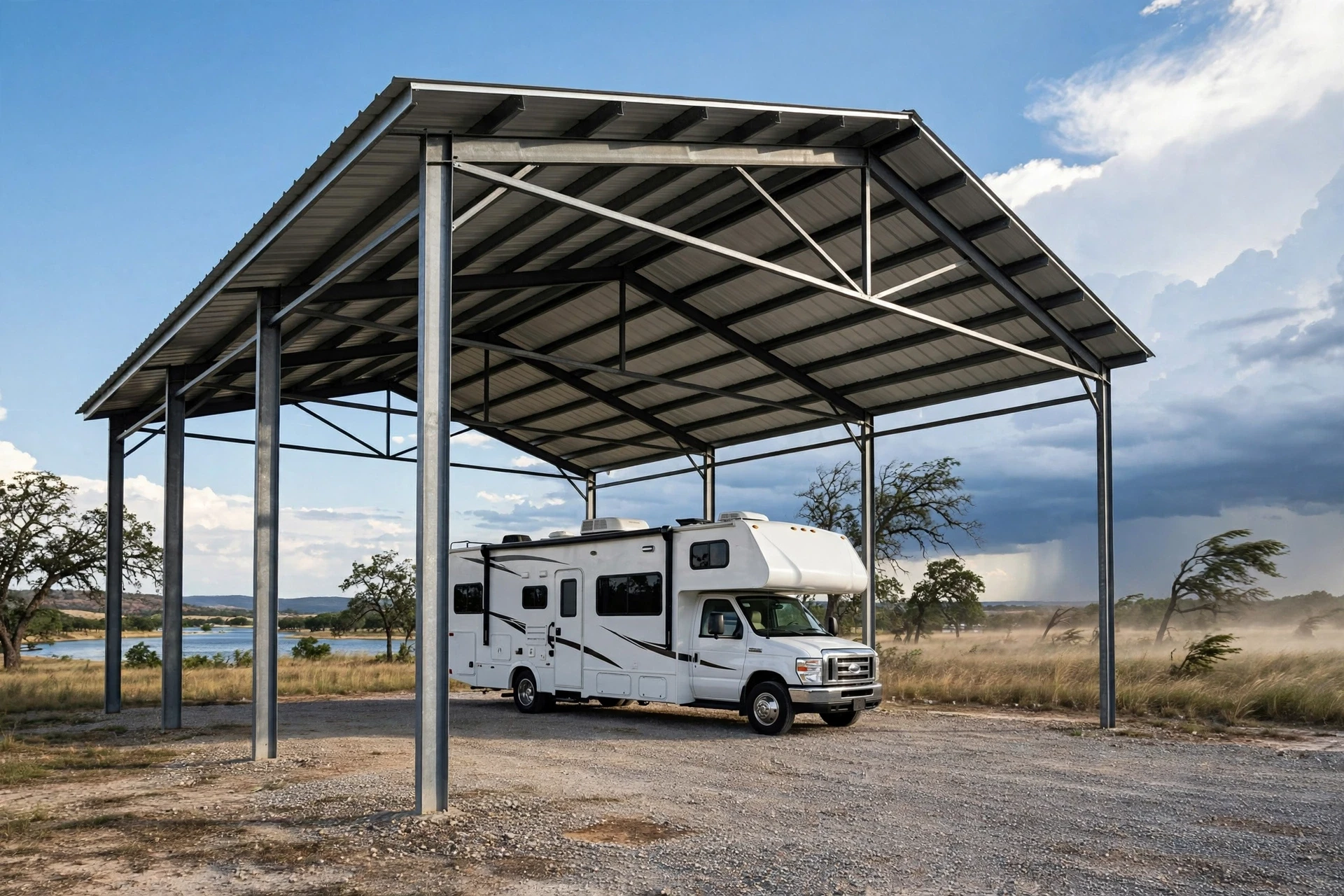
A canopy blocks sun and hail, which are the biggest threats here. Texas UV rays fade paint, crack seals, and dry out tires far faster than most owners expect. A covered space also sheds rain and light hail, so your roof and slide seals last longer.
But be honest about the limits. Wind-driven rain can still blow sideways under open sides, and dust settles on everything. In summer, radiant heat still radiates off the slab.
Walk the space before you commit. Check that the canopy height clears your AC unit and antenna, and look at how the roof angles against prevailing storms. Facilities like covered RV storage near Lake Whitney handle sun and hail well; enclosed units are the fix if you also want dust and wind protection.
Step 3: Verify Security, Access, and Site Conditions
A canopy is only half the deal. The ground, the gate, and the lighting matter just as much, so walk the property and ask direct questions before you sign anything.
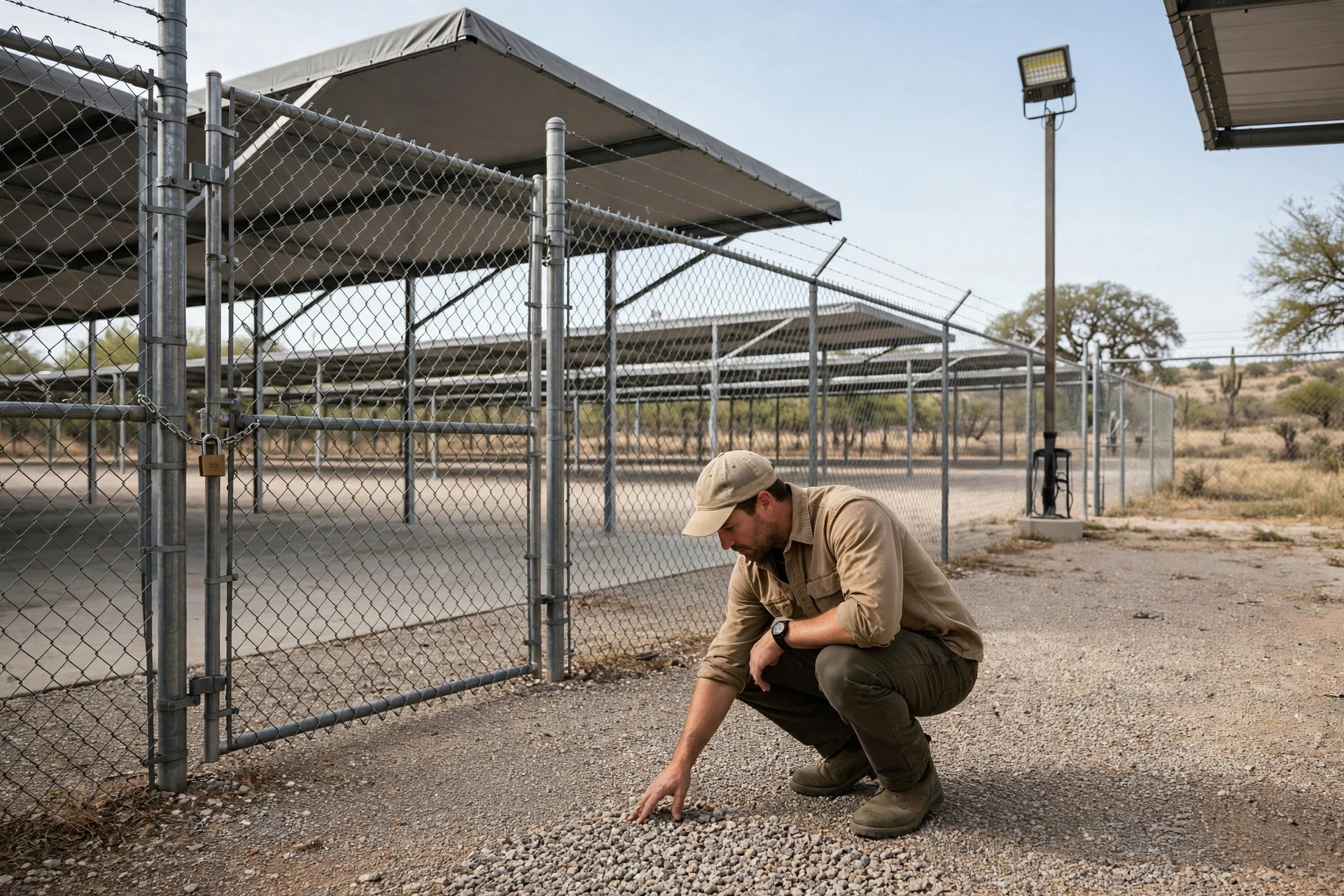
Ask these during a facility visit:
- Surface: Is the pad gravel or concrete? Does it drain after heavy rain, or do tires sink in spring?
- Security: Is the gate code-controlled? Are there cameras, fencing, and lights that stay on at night?
- Access: What are the gate hours? Can you reach your rig on a Sunday before a trip?
- Space: Will a 40-foot rig fit with room to turn and hook up a tow vehicle?
- Upkeep: Who clears storm debris from the canopy area?
For secure, well-drained covered spots near Lake Whitney, check out the team at R&P Storage and RV Park, who offer both short and long-term options.
Step 4: Compare the Space to Your Storage Priorities
Match each lot against your own list. If you store between weekend trips, easy pull-through access and wide turns matter most. For a rig that sits for months, shade coverage, surface drainage and on-site security rank higher.
Write down your top three needs before you tour. Then score every facility, including options near Lake Whitney like secure RV storage that pairs canopies with fenced, gated lots.
| Priority | What to Check | Deal Breaker |
|---|---|---|
| Sun protection | Canopy height and roof span | Gaps that expose the roof |
| Security | Fencing, lighting, cameras | Open, unlit lot |
| Access | Gate hours, turn radius | Tight lanes for a 40-foot rig |
One clear winner usually stands out after two or three visits.

Texas sun and hail won’t wait, so neither should your rig. Reserve your covered spot at R&P Storage and RV Park near Lake Whitney today.
Frequently Asked Questions
Q1: Best RV storage in Texas for security?
Look for fenced lots, gated access, cameras, and lighting. R&P Storage and RV Park near Lake Whitney offers secure covered and open spaces for RVs, boats, and trailers.
Q2: Does a canopy protect against hail?
It reduces hail and sun damage, but wind-driven rain can still reach your RV. Add an RV cover for full protection.
Q3: Is covered storage worth the extra cost?
In Texas heat, yes. Shade limits roof sealant damage, tire cracking, and interior fading over long storage periods.
Choose a Covered Space With Clear Eyes
A canopy shields your RV from sun and hail but not humidity or wind-driven rain. Check clearance, surface, drainage, security and access before you sign. Compare covered and enclosed RV storage to match Texas weather with the right fit.