
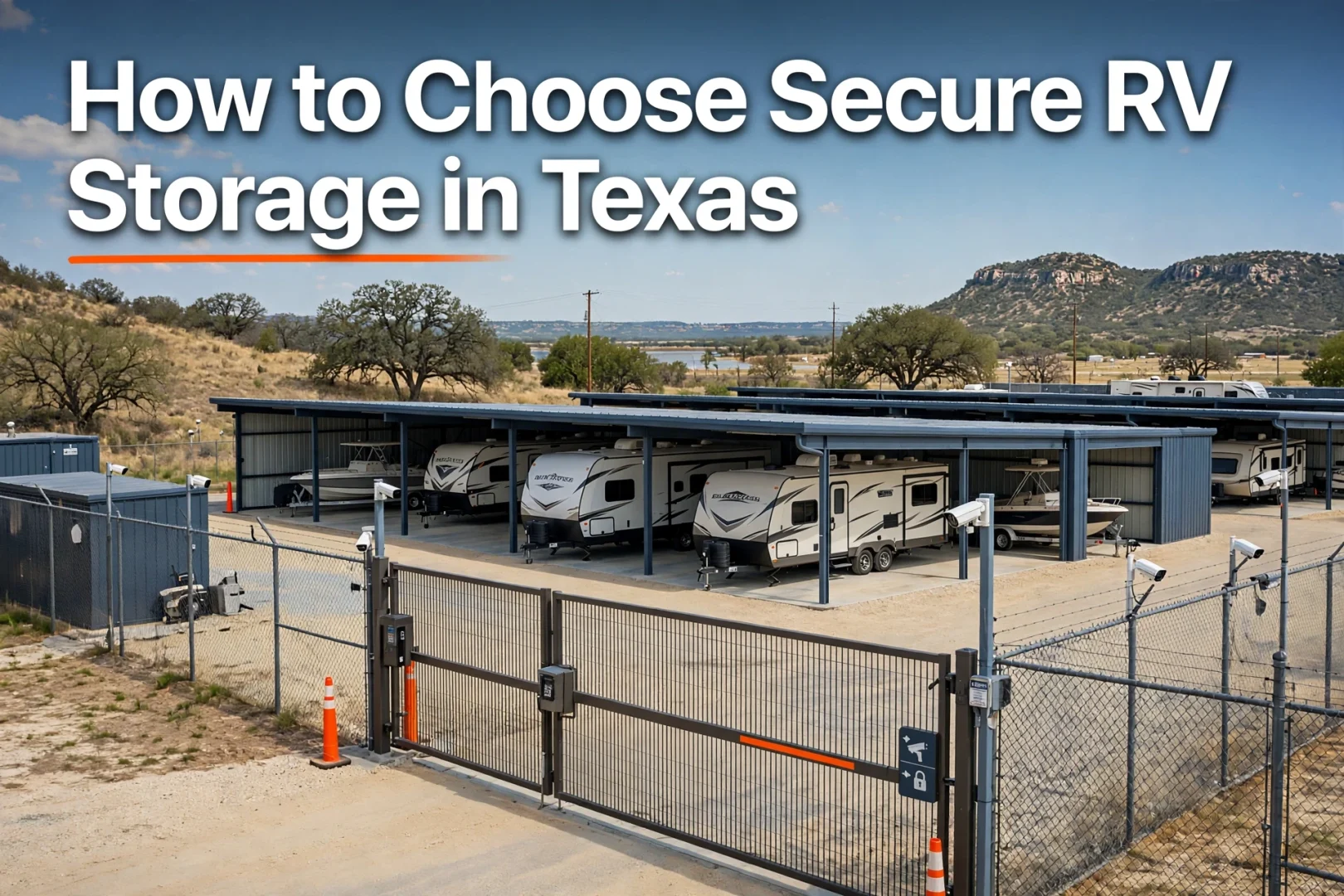
Quick Summary: Choosing secure RV storage in Texas means matching the storage type to your rig’s value and checking layered security, flood risk, and vehicle fit before signing. Covered or enclosed spaces protect against hail, which can cause $3,000 to $15,000 in damage, and you should verify FEMA flood zones, gate access, and hidden fees in the lease. Walk the lot unannounced, compare total costs including setup and late fees, and pick the highest protection your budget allows. R&P Storage and RV Park near Lake Whitney offers covered and open options with transparent short- and long-term rates.
Texas sun and hail punish an RV parked in the open, but a roof alone does not equal secure RV storage. Texas owners also need to weigh fencing, flood risk, vehicle fit, and lease terms. This guide walks through all of it, so you can find secure RV storage in Texas with confidence. We help RV and boat owners near Lake Whitney compare facilities the same way.
Step 1: Match the Storage Type to Your RV and Weather Exposure
Your storage type matters as much as your lot. Texas leads the country in hail risk, and one storm can crack an RV roof, windshield, or skylight in minutes. Start by matching your rig’s value and storage length to the right space.
Compare Open, Covered, and Enclosed Spaces
| Type | Protection | Best Fit |
|---|---|---|
| Open | None from sun, hail, or storms | Older rigs, short-term, low budget |
| Covered | Roof blocks sun, rain, and most hail | Newer RVs, long-term, mid-budget |
| Enclosed | Full weather barrier plus locked walls | High-value RVs and boats |
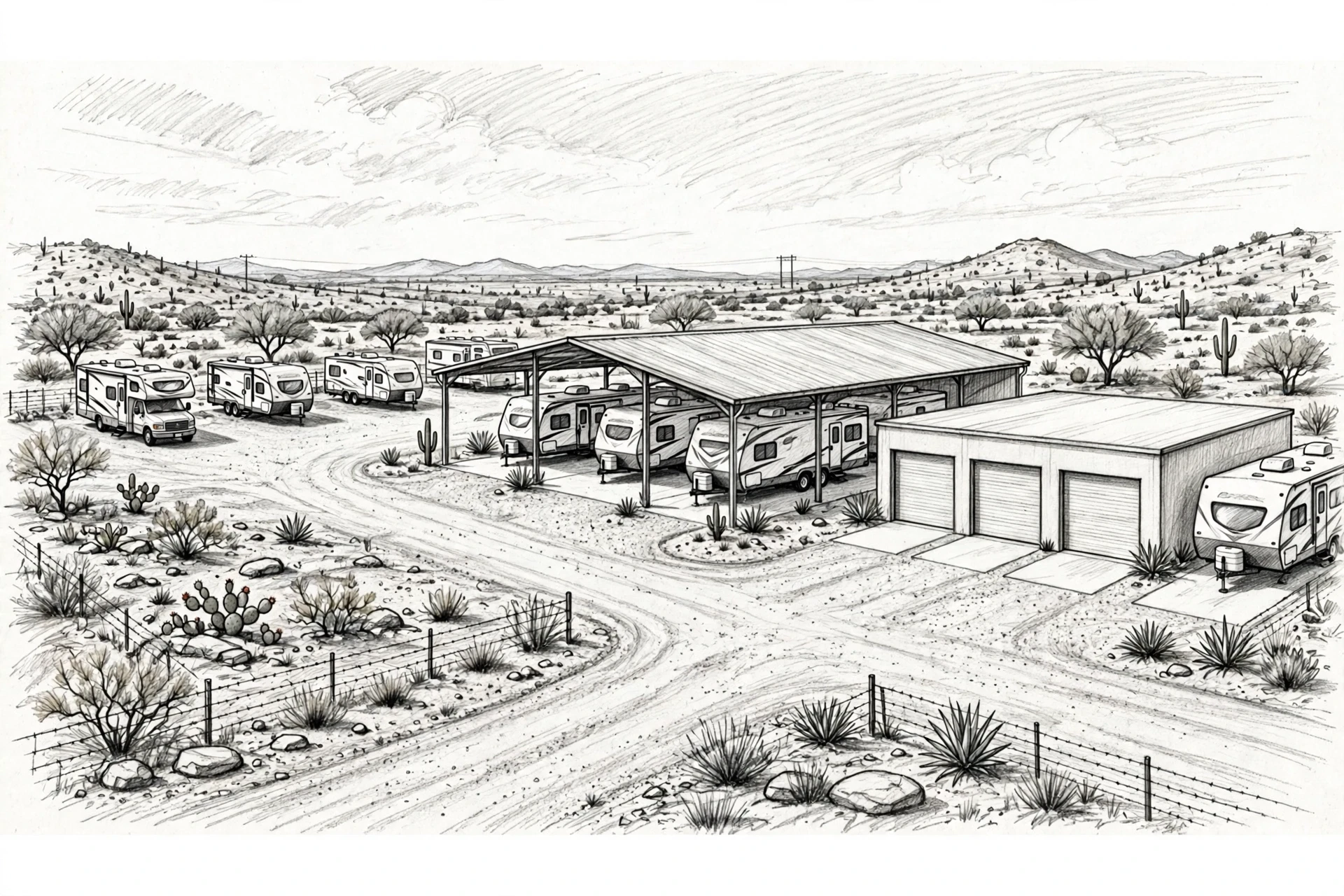
Covered and enclosed options cut UV fade and hail damage, which is why most secure RV storage Texas facilities offer both. Enclosed storage also helps resale value, since enclosed RVs depreciate far slower in Texas markets.
Hail can cause $3,000 to $15,000 in damage to an unprotected RV. A single storm can wipe out years of storage savings.
When comparing secure RV storage Texas options, pick the highest protection your budget allows. R&P Storage and RV Park offers covered and open secure RV storage Texas options near Lake Whitney.
Also Read: 7 Trailer Parking Security Features Texas Owners Need
Step 2: Verify Security, Site Conditions, and RV Fit
A feature list doesn’t prove a lot is safe. Walk the property and check three things: security, drainage, and fit.
Inspect Security and Flood Readiness
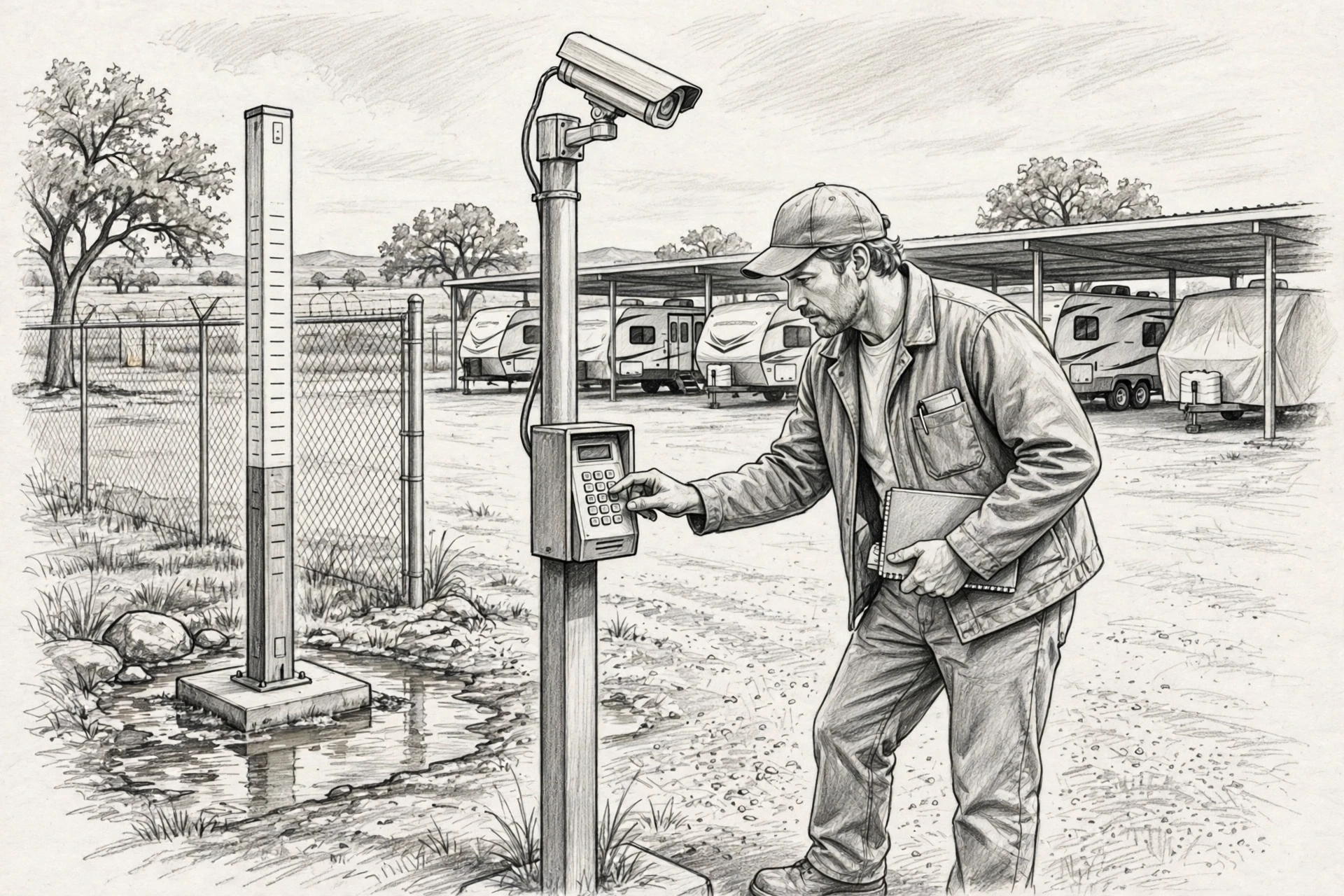
Look for layered protection: a gated entry with coded access, bright lighting, working cameras, and tall fencing that a truck can’t push through. Ask how often staff check the lot and who can enter after hours. Then check the ground itself. Gravel pads drain better than bare dirt, and standing water after rain is a bad sign. Any lot with a 1% yearly chance of flooding counts as high risk, per FEMA’s flood maps. You can enter the facility’s address in the FEMA Flood Map Service Center to see its flood zone before you sign anything.
Tip: Visit unannounced in the evening. You’ll see lighting and gate activity the way your RV will experience them.
Confirm Space, Clearance, and Maneuverability
Bring your measurements: length, height, and slide-out width. A 40-foot fifth wheel needs more room than a 24-foot travel trailer. Ask these questions:
- Is the pad long enough for the tow vehicle too?
- Are aisles at least wide enough for one clean turn?
- Is the surface gravel or paved, not soft dirt?
Facilities like R&P Storage and RV Park near Lake Whitney offer both open lots and covered bays, so you can match the spot to your rig instead of forcing a tight fit. Lake Whitney Boat and RV Storage is another local option worth comparing on the same points.
Also Read: Review of Top RV Storage Facilities Near Lake Whitney
Step 3: Compare Access, Amenities, Costs, and Lease Terms
Check Access and Useful Services
Security means little if you can’t reach your RV when you need it. Check the gate hours first. Many facilities limit access to daylight windows, while others offer app-based entry with records of every entry and exit. Also confirm lane width, turn radius, and whether pull-through spots exist for big rigs.
Useful extras to compare:
- Dump station, water, or electric for battery maintainers
- Wide, gravel-free pads that drain well after rain
- On-site trash and wash-down areas
Read the Agreement and Confirm Total Cost
Read the contract before you pay. Many storage leases run month-to-month with a 30-day written notice to leave, plus setup and late fees that add up fast.
| Cost Item | What to Verify |
|---|---|
| Base rent | Monthly rate and due date |
| Fees | Setup, late, and lock-out charges |
| Notice | Days required before vacating |
| Deposit | Refund terms and conditions |
Ask about rent increase rules in writing. Facilities usually raise rates with 30 days’ notice, so plan your budget around possible bumps.
Most Texas facilities, including R&P Storage and RV Park near Lake Whitney, offer flexible short- and long-term terms, so match the lease length to how often you travel.
Also Read: Choosing the Best RV Storage Texas Near You
Step 4: Compare Finalists and Make a Documented Choice
Score your top two or three side by side. Compare total monthly cost, security, access hours, and contract terms – not just the headline rate, since hidden fees and rate-raise clauses can change the real price. Walk the lot before signing; a 30-minute visit reveals drainage, lighting, and access problems a listing can’t. Write down what each facility promised, then choose. R&P Storage and RV Park makes this easy with transparent short- and long-term rates.

Ready to store your RV somewhere safe near Lake Whitney? R&P Storage and RV Park offers secure, short- and long-term parking for RVs, boats, and trailers. Visit randpstorageandrvpark.com to reserve your spot today.
Frequently Asked Questions
Q1: How do I choose secure RV storage?
Look for layered security: fencing, cameras, gated entry, and good lighting. Also check flood risk, vehicle fit, and owner access rules.
Q2: How much does RV storage cost in Texas?
Expect $50-$250 monthly, depending on size, coverage, and location. Get quotes from several facilities near you.
Q3: Do I need insurance while my RV is stored?
Yes. Most facilities require active coverage. Ask your insurer about storage-only policies that lower premiums.
Conclusion
Picking secure RV storage comes down to five checks: layered security, weather and flood risk, vehicle fit, contract terms, and access. Since about 75% of RV thefts happen in storage, one visit answers more than any feature list. RV theft prevention data